

How To Install A 120 Volt Outlet
Wiring Diagrams for Receptacle Outlets
Cheque permit requirements earlier first electric work.
How to read these diagrams.
This page contains wiring diagrams for nigh household receptacle outlets yous will encounter including: grounded and ungrounded duplex outlets, footing fault circuit interrupters (GFCI), 20amp, 30amp, and 50amp receptacles for 120 volt and 240 volt circuits.
Wiring a Grounded Duplex Receptacle Outlet
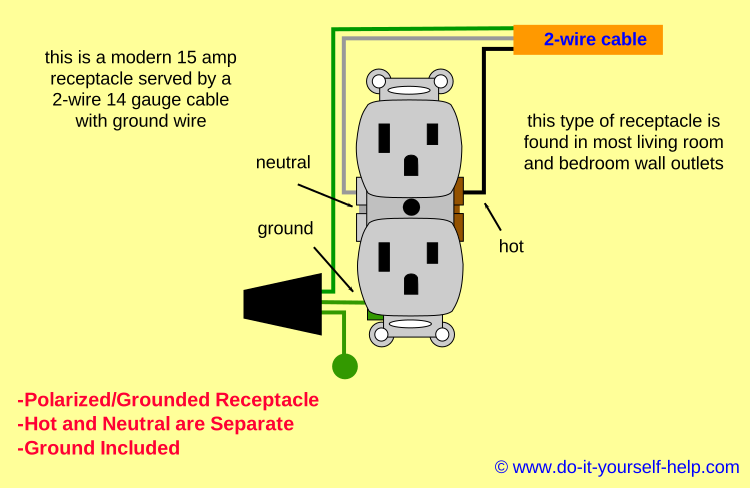
This is a standard xv amp, 120 volt wall receptacle outlet wiring diagram. This is a polarized device. The long slot on the left is the neutral contact and the short slot is the hot contact. A grounded contact at the lesser, center is crescent shaped. Don't utilise this receptacle when no basis wire is available. This receptacle tin can typically exist found in living room and bedroom wall outlets. One of these may be controlled with a switch and/or wired to other outlets in the circuit. For a 15 amp receptacle like this, 14/2 cable with ground should be used to feed the circuit.
Wiring an Ungrounded, Polarized Outlet
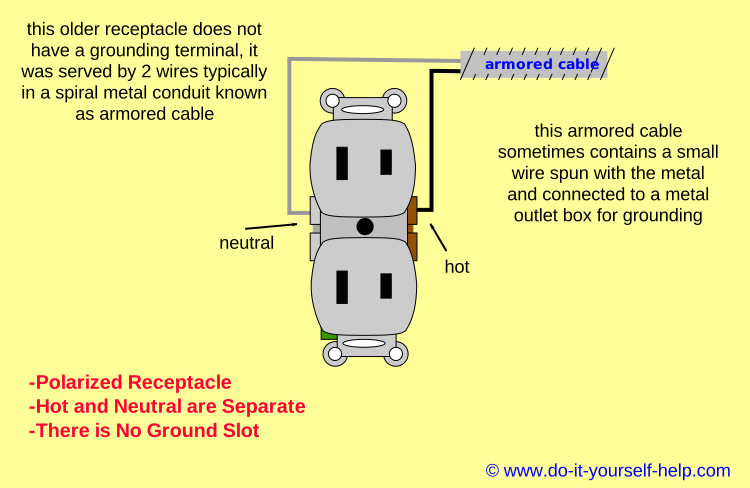
This is an older version of the receptacle in the first diagram. The slots are different sizes to accept polarized plugs merely it lacks a grounding slot. This outlet does not brand use of a ground wire and in that location is no protection against electrocution as provide by the grounded receptacle above. When replacing an ungrounded, polarized receptacle use this blazon and non the grounded type previously mentioned unless it is grounded by a jumper wire to a metal outlet box that is tied to the firm service panel ground through a continuous metal conduit. Here the excursion wires are contained in a screw metal conduit known equally an armored cable. A pocket-sized wire is sometimes spun in with the metallic spiral and connected to the metal outlet box to provide grounding.
Wiring an Ungrounded, Not-Polarized Outlet
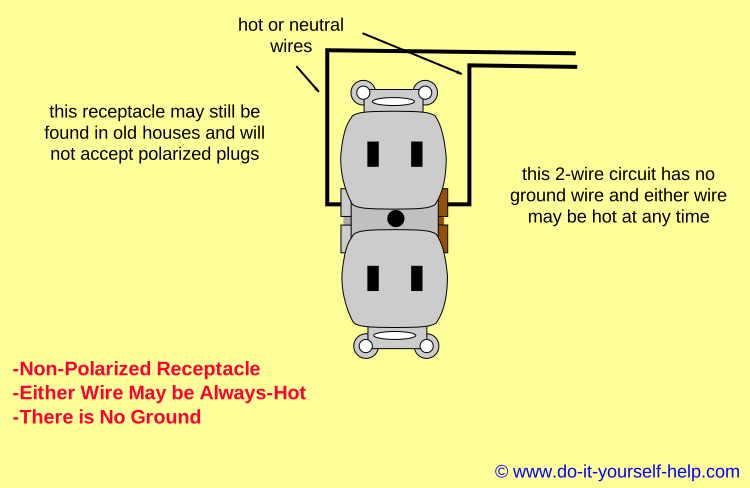
This is the oldest version of a wall receptacle that you will find. Information technology lacks a grounding contact and the plug slots are both the same size. These devices did not make utilise of a ground wire and both plug slots were treated the aforementioned with regard to polarity. The wires used with these outlets were usually both blackness. With this configuration any wire in the excursion may be hot at all times and there's no protection against electrocution. When replacing an ungrounded device in an older circuit similar this, utilize the polarized ane above and not the grounded receptacle at the summit unless it is grounded to a metal outlet box that is itself grounded to the house electrical system through a continuous metal conduit.
Wiring a Footing Fault Circuit Interrupter
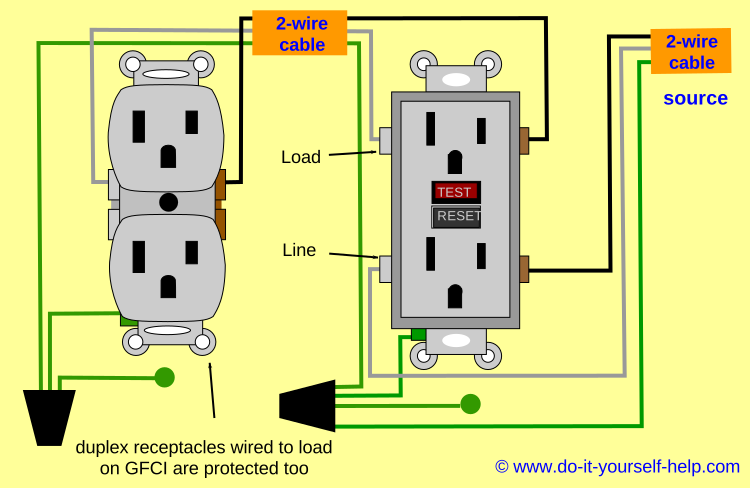
This diagram illustrates a GFCI, or footing fault excursion interrupter, receptacle in a 15 amp circuit. These devices are bachelor in both 15 and 20 amp. A GFCI has two sets of separated terminals: the line terminals and the load terminals. The source from the excursion will always be connected to the line terminals. Whatever standard duplex outlet or other device continued to the load terminals on this device volition be protected by this GFCI. In a kitchen where but one outlet box is available and both a switch for a garbage disposal and a GFCI receptacle are needed, a switch/gfci combo can be used as in the diagram at this link.
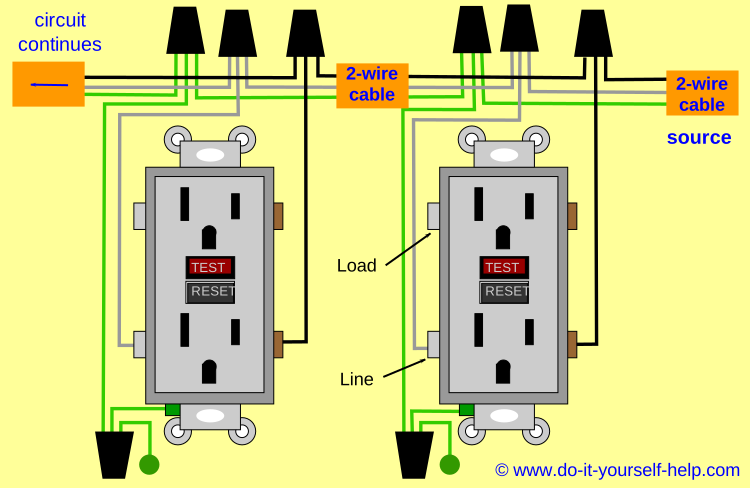
To wire more than ane GFCI receptacle in the same circuit, connect the source to the line terminals on each device using a pigtail splice. The load terminals are not used for this circuit. See more GFCI wiring diagrams at this link.
Wiring Diagram for a 20-Amp 120-Volt Duplex Receptacle
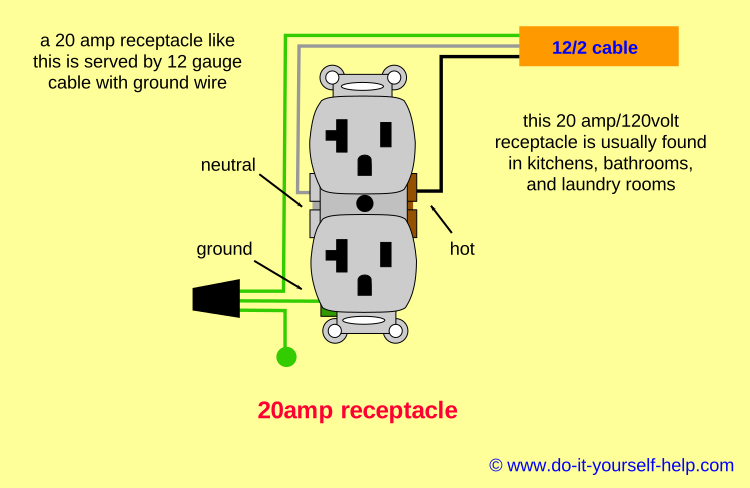
A xx amp, 120v duplex receptacle outlet like this should be installed in a excursion using 12 awg cable and a twenty amp circuit breaker. These receptacles are usually found in kitchen wall outlets where two branch circuits are needed to serve small-scale appliances and a fridge separately. When using this device for heavy appliances like washing machines and microwaves, it should be continued to a defended 20-amp/120-volt circuit breaker. Every bit of 2022, a GFCI receptacle is now required in a laundry room for the washing auto.
Wiring a xx-Amp 240-Volt Appliance Receptacle
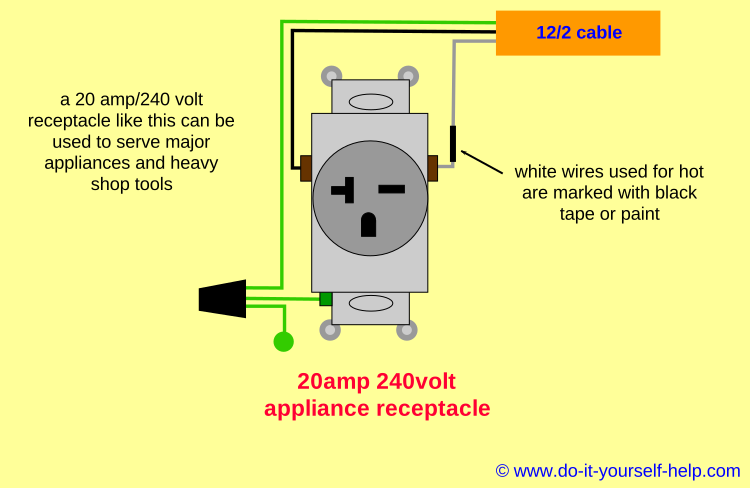
This outlet is usually used for a heavy load such as a big air conditioner. The outlet should exist wired to a dedicated xx-amp/240-volt circuit breaker in the service console using 12|2 awg cable. With this wiring, both the black and white wires are used to carry 120 volts each and the white wire is wrapped with electrical tape to label information technology hot. This circuit doesn't make use of a neutral wire and the ground wire is connected to the ground final on the device. The slots are configured to accept only plugs from uniform appliances.
Wiring a 30-Amp 240-Volt Outlet
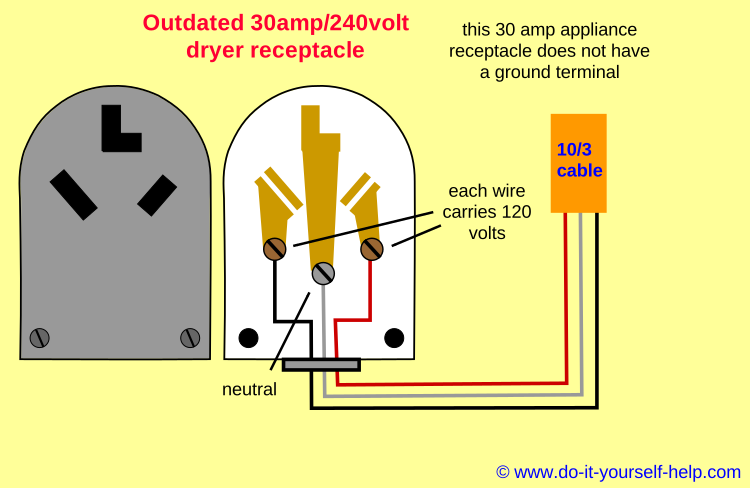
A 30 amp circuit was once the norm for large, loftier voltage appliances like clothes dryers and kitchen ranges. These receptacles are no longer permitted in new installations just are still in use where they already exist.
This receptacle provides 240 volts and 30 amps service. A iii-wire cablevision is needed to carry ii 120 volt wires and a neutral return for a total of 240 volts. This arrangement makes information technology possible to power the heating elements in the apparatus using the two 120 volts combined and 120 volt lonely to power timers and lights. The smallest cable allowed for use with a 30-amp excursion is x gauge just eight gauge may also be found in i of these circuits. The circuit is wired to a dedicated xxx amp excursion breaker.
Wiring Diagram for a xxx-Amp Dryer Outlet
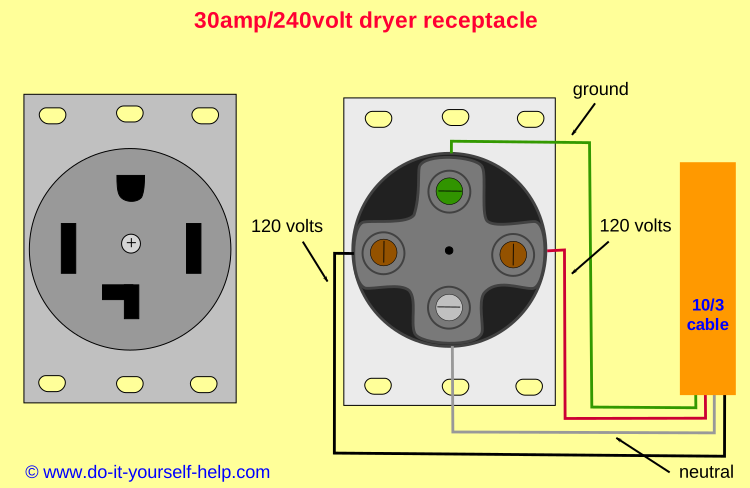
This is a newer version of the outdated 30 amp receptacle appearing in the previous diagram. This circuit is used for a new clothes dryer outlet installation. This receptacle has a ground connectedness not establish in the older 30 amp circuit for added protection against electrocution. A 30 amp outlet like this requires x/iii cable with footing. The cable contains two 120 volt wires, a neutral wire and a ground wire. This receptacle is connected to a dedicated 30 amp circuit billow and provides a full of 240 volts to power the dryer heating elements and 120 volts to power lights and other features of the apparatus.
Wiring a 50-Amp, 240-Volt Appliance Outlet
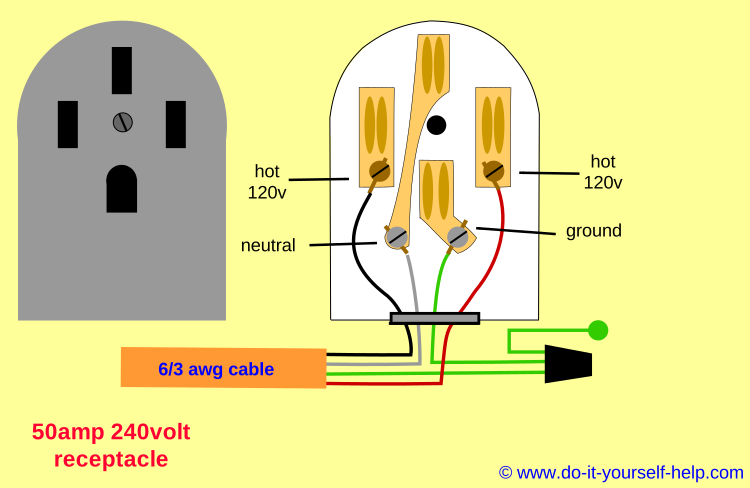
This wiring diagram is used for 50 amp appliance outlet. The receptacle should be wired to a dedicated fifty amp circuit breaker using vi awg cable. The 50 amp excursion is required for new installations of some big appliances requiring 240 volts. Two wires carrying 120 volts each can be combined to provide loftier voltage to heating circuits and one of the 120 volt wires tin can serve lights or other low voltage circuits in the apparatus. The neutral wire provides a render path for the circuit and the ground wire provides actress protection from electrocution not found on older 30 amp, 240 volt appliance hookups.

Source: https://www.do-it-yourself-help.com/receptacle-outlet-wiring-diagrams.html
Posted by: kimyage1981.blogspot.com
0 Response to "How To Install A 120 Volt Outlet"
Post a Comment